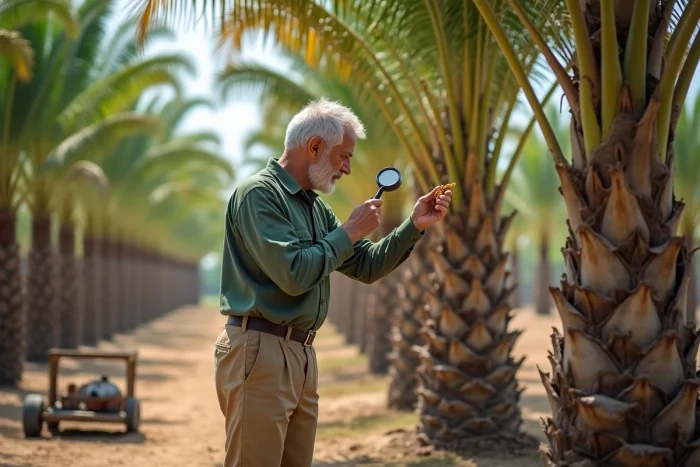
A palm tree can go from splendor to ruin in less than a summer. In the face of the palm moth, inaction has never saved any tree. Chemical treatments, long touted as a miracle solution, quickly lose their effectiveness once the infestation takes hold. Despite their massive use, they fail to halt a well-advanced attack. Alternatives, often relegated to the background, outperform the classics when accompanied by regular vigilance and intervention at the first signs. The speed of action remains the decisive factor in limiting damage and preserving the vitality of your palm trees.
Quickly recognizing an infestation: signs that should alert you
The palm moth, Paysandisia archon, has become a nightmare for palm trees in Southern Europe. It all starts with the trained eye: scrutinize, track down the slightest clue. Attacks first hit sensitive varieties such as Phoenix canariensis, Trachycarpus fortunei, or Chamaerops humilis. The larvae burrow tunnels deep within the heart of the palm, paving the way for sometimes brutal decline.
Several symptoms deserve relentless attention:
- Holes in the fronds or at the base of the stipe, often associated with sawdust deposits.
- Yellowing, dried leaves, or leaves that suddenly fall without apparent reason.
- Deformation of new shoots, evidence that the heart of the tree is already under attack.
Tunnels dug in the stipe by the larvae of Paysandisia archon indicate that the enemy is already well established. Regular inspections are necessary, especially from spring to late summer, in all at-risk areas: southern France, Spain, Italy, Greece, and even the Swiss Ticino. The life cycle of the moth, which spans one to two years, allows each female to lay nearly 200 eggs on a single palm tree. From these eggs hatch caterpillars that burrow deep into the tissues, hidden from view. Only rapid detection allows for the application of the palm moth treatment and hope to stop the tree’s decline. Every anomaly counts: early detection is already limiting the damage.
Why acting without delay against the palm moth can save your trees
The palm moth, or Paysandisia archon, thrives on our continent in the absence of natural enemies. This reality weighs heavily on every garden: waiting means condemning the tree. The larvae advance quickly, burrowing into the trunk, accelerating the palm’s fall. A timely diagnosis can change the fate of trees that are sometimes over a hundred years old. Some varieties, Phoenix canariensis, Trachycarpus fortunei, Chamaerops humilis, long mask the first damages. Hence the necessity for constant vigilance, especially in regions already infested, from southern France to the entire Mediterranean coast.
If nothing is done quickly, each female can lay up to 200 eggs on the same tree. Each new larva burrows, weakens, and ultimately annihilates the palm. To counter this progression, action is required: targeted treatments, attentive monitoring, repeated measures. Protecting a palm tree also means defending plant diversity: in abandoned gardens, in poorly maintained parks, losses multiply. Urgency leaves no room for hesitation.

An overview of the most effective methods to treat and sustainably protect your palm trees
To combat Paysandisia archon, the strategy must be clear and tailored. Several treatment methods exist, combining biological control, physical protection, and natural interventions.
Biological control: the ally of biodiversity
Two biological approaches yield concrete results:
- The application of entomopathogenic nematodes (Steinernema carpocapsae) targets the hidden larvae in the trunk. Used in spring and autumn, this method exploits the parasitic power of nematodes, which eliminate the larvae without disrupting the ecosystem.
- Bacillus thuringiensis, used against young caterpillars, acts selectively and respects pollinating insects.
Physical barriers and natural treatments
Physical and natural protections strengthen the anti-moth arsenal:
- The application of specific glue (like Biopalm) on the stipe blocks the egg-laying by the female. Insect nets prevent the adult moth from accessing the most sensitive palms (Phoenix canariensis, Trachycarpus fortunei, Chamaerops humilis).
- The use of neem oil or black soap enhances protection, especially on young shoots where the larvae begin their cycle of destruction.
Regarding pheromone traps, their effectiveness proves disappointing against Paysandisia archon. It is better to prioritize regular inspections, maintain the foliage, and, upon detection, manually eliminate the larvae. Some species, like Sabal, resist invasion better. Preserving this diversity also limits damage and prepares for the future.
The battle against the palm moth is not improvised: every action counts, every observation can save a tree. On the scale of a neighborhood or a region, the survival of palm trees depends on a shared reflex: act quickly, act correctly. The silhouette of a standing palm tomorrow often relies on today’s vigilance.