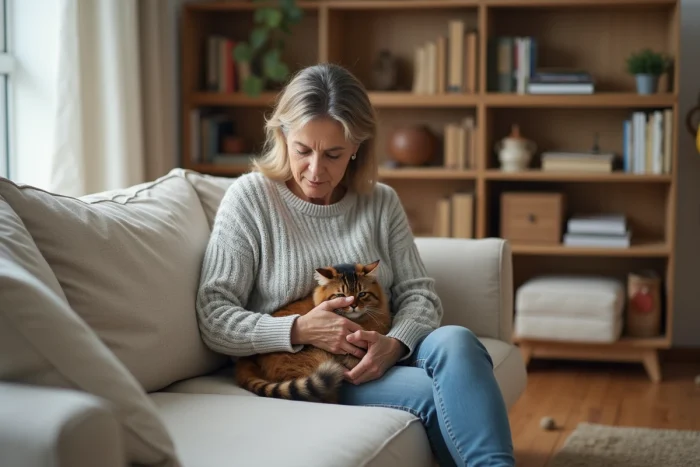
Cat hair is not toxic in itself. It contains neither dangerous chemicals nor specific pathogens. The problem lies in what it carries: allergen micro-particles, skin flakes, dried saliva residues, and sometimes bacteria or parasites. This distinction radically changes the way we assess the respiratory risk associated with living with a feline.
Indoor air quality and highly insulated homes: a trap for cat owners
Competitors rarely approach the issue from a building perspective. Recent homes, designed according to low-energy standards, have a significantly better airtightness than older dwellings. This thermal performance has a downside: without efficient mechanical ventilation, suspended particles remain trapped inside.
Cat allergens, particularly the Fel d1 protein produced by sebaceous glands and saliva, attach to the fur and then disperse into the air as very fine particles. In a properly ventilated apartment, some of these particles are continuously expelled. In an airtight home with poorly maintained or undersized ventilation systems, they accumulate on textiles, carpets, and ventilation filters.
Research conducted in Europe in recent years on indoor air quality confirms that low-energy buildings can concentrate more cat allergens when air renewal is insufficient. For cat owners living in this type of housing, an article detailing the risks to cat lungs on British & Co usefully complements this technical perspective.
Checking the actual flow rate of your ventilation system and cleaning the extraction vents at least twice a year becomes a health measure, not just a thermal comfort one.

Fel d1 and respiratory inflammation: what cat hair really triggers in the lungs
The allergic mechanism related to cats is often mistakenly summarized as “hair allergy.” The Fel d1 protein, deposited on the coat during feline grooming, is the true trigger. It is so light that it remains suspended in the air for hours after the cat has left the room.
When a sensitized person inhales these particles, their immune system identifies them as a threat. The chain reaction is classic: release of histamine, inflammation of the nasal and bronchial mucosa, followed by the onset of symptoms (rhinitis, dry cough, respiratory discomfort). In asthmatics, this exposure can trigger attacks requiring ongoing treatment.
Post-viral bronchopathies and exposure to cat allergens
Since 2023, several hospital teams have reported exacerbations of respiratory symptoms in patients with long COVID or post-viral bronchial sequelae when exposed to cat allergens at home. These observations do not demonstrate a direct causal link with the hair itself, but they suggest that chronic exposure to Fel d1 may amplify already established respiratory inflammation.
People who were previously not allergic to cats have developed new sensitivity after a severe viral episode. This phenomenon is documented clinically but not yet on a large scale, but it deserves attention for anyone living with a cat and experiencing persistent respiratory symptoms.
Bacteria and parasites on fur: risks beyond allergy
Allergy is not the only problem. Cat hair also serves as a vector for infectious agents, particularly during prolonged contact or on broken skin (scratches, eczema).
- Salmonella and E. coli can be found on the fur of a cat that goes outside and comes into contact with contaminated materials. The risk of transmission to humans exists through direct contact, especially if handwashing is neglected after petting.
- Some internal parasites of cats (roundworms, toxoplasma) release microscopic forms that can settle on the fur via the litter. The risk is particularly monitored in pregnant women and immunocompromised individuals.
- Fungi responsible for feline ringworm directly colonize the hair and are transmitted through contact. A healthy carrier cat, with no visible lesions, can contaminate its environment for several weeks.
A regularly dewormed animal, treated for external parasites, and monitored by a veterinarian significantly reduces these risks. The clean fur of a well-maintained indoor cat does not pose the same level of threat as an untreated stray cat.
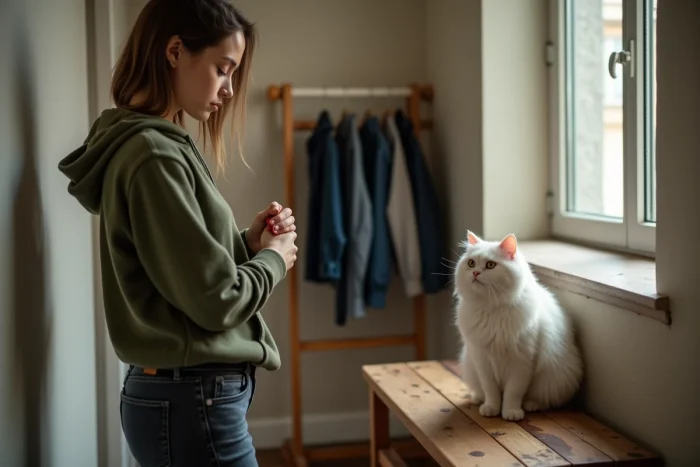
Reducing exposure without parting with your cat: game-changing actions
Co-habitation remains possible, even for slightly sensitized individuals, provided that action is taken on the environment rather than solely on the animal.
- Vacuuming textiles, sofas, and carpets at least twice a week with a vacuum cleaner equipped with a HEPA filter captures the majority of allergenic particles. A quick pass is not enough: focusing on areas where the cat regularly lies down makes all the difference.
- Restricting the cat’s access to the bedroom limits nighttime exposure, a time when the airways are particularly vulnerable for several consecutive hours.
- Installing an air purifier with a HEPA filter in the main living area captures suspended Fel d1 particles, in addition to mechanical ventilation.
- Washing hands after each petting session and avoiding touching the face reduces the transfer of allergens to the nasal and ocular mucosa.
These hygiene measures do not replace medical advice in case of persistent symptoms. An allergist can provide a precise assessment and, if necessary, refer for immunotherapy to gradually desensitize the immune system to Fel d1.
The cat’s fur remains a vector, not a cause. Acting on ventilation, cleaning, and veterinary follow-up transforms a diffuse threat into a controlled risk, without sacrificing life with your pet.