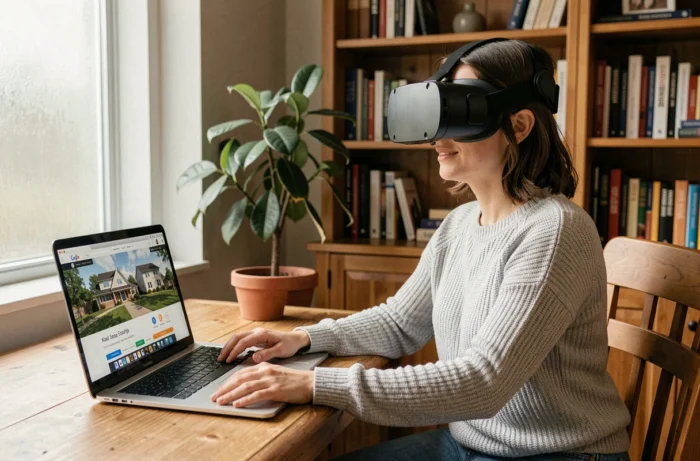
The virtual real estate tour is not just a 360° slideshow. Its effectiveness relies on precise technical choices, from the sensor used to the distribution format, which determine whether a potential buyer will feel an emotional connection to the property or close the tab within seconds.
Sensors, meshing, and rendering: what separates a high-performing virtual tour from a gadget
The quality of a virtual tour primarily depends on the capturing equipment. Dual-lens wide-angle cameras produce acceptable panoramas, but it is the LiDAR scanner combined with photogrammetry that generates a usable 3D mesh for measuring surfaces and arranging furniture. Without this mesh, the buyer navigates through a flat image, not a space.
The final rendering relies on the assembly of the viewpoints (dollhouse, floor plan, free navigation). Too few capture points, and the visitor perceives visual jumps that break immersion.
We observe that agencies investing in serious HDR processing, with room-by-room white balance correction, achieve a significantly more realistic result than those that settle for automatic rendering. Poorly calibrated natural lighting remains the primary factor of disappointment during the physical visit when the buyer discovers darker rooms than on the screen.
The distribution format is as important as the capturing. A file that is too large slows down loading on mobile, where the majority of real estate listing consultations occur. Optimizing the weight of panoramas remains a technical step that should not be overlooked.

Virtual tour and real estate crush: what the data really shows
The idea that virtual tours accelerate sales is widely circulated. The available data nuances this narrative. According to a working paper from Harvard Business School covering over 75,000 transactions, virtual tours are associated with an average increase in sale price of about 1%. This figure varies based on the characteristics of the property and the local market.
Thus, it is not an automatic premium. A poorly presented property virtually will not sell better than with simple photos. However, for a property properly showcased, the virtual tour acts as a qualitative filter: it attracts buyers who are already emotionally engaged even before the physical visit.
The real leverage lies in reducing unnecessary visits. French sector feedback relayed by LeMedia.Immo indicates that nearly half of physical visits are deemed irrelevant by buyers. The virtual tour then serves as a pre-selection tool, not a substitute. Buyers who visit after a virtual tour arrive with a clearer intention, which shortens the decision cycle.
It is in this logic of pre-selection that the anti-staging proposed by lamaison360 on Ventes Immo makes sense: to offer a virtual staging that allows the buyer to project themselves into a realistic arrangement before any visit.
Virtual home staging and cognitive biases: why the brain bites the bait
Virtual home staging is not limited to placing a digital couch in an empty living room. When well executed, it activates cognitive biases measured in consumer psychology.
- The endowment effect: by freely navigating in a furnished space, the buyer begins to project themselves as the owner. This feeling of anticipated ownership increases the perceived value of the property.
- Visual anchoring: the first image of a property determines the reference point for comparison. A property presented with careful staging sets a positive anchor that is difficult to dislodge, even if the physical visit reveals minor flaws.
- Reducing uncertainty: an empty property generates doubt about the proportions and use of the rooms. Virtual furniture answers these questions without the buyer needing to articulate them.
We recommend limiting virtual staging to a maximum of three styles per listing. Multiplying the atmospheres dilutes the message and prevents the buyer from fixing their imagination on a specific life project.
GDPR compliance and information obligations in virtual real estate tours
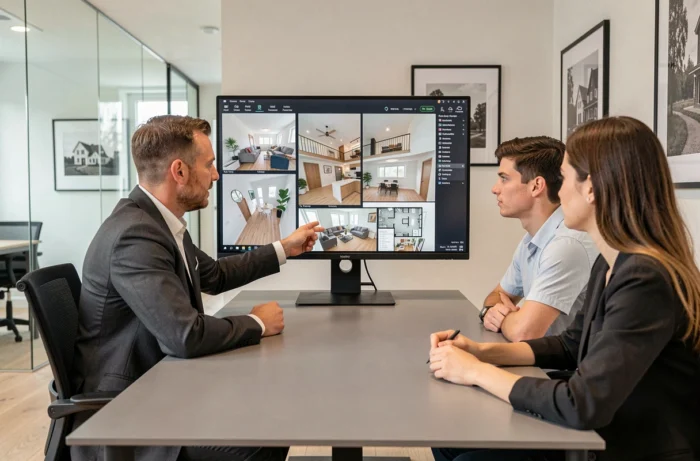
A rarely addressed angle: virtual tours raise compliance questions. As soon as a property is occupied, personal items, family photos, or documents visible in the camera’s field constitute personal data under the GDPR.
Blurring identifying elements is not always sufficient. If the blurring is reversible or partial, the processing remains non-compliant. Serious providers incorporate a validation process with the owner before publication, including a right of withdrawal on each viewpoint.
For properties in co-ownership, capturing common areas (entrance hall, parking, bike storage) may require the consent of the property manager. In practice, this obligation is often ignored, exposing the agency to complaints from co-owners.
Digital accessibility of the virtual tour
3D navigation interfaces remain largely inaccessible to people with visual impairments. No industry standard currently mandates alternative text descriptions of spaces. This is a gap that platforms will need to fill, especially in light of the increasing obligations related to digital accessibility in Europe.
The virtual real estate tour functions as a qualification tool, not as a magic shortcut. Its effectiveness depends on the technical quality of the capturing, the relevance of the staging, and compliance with regulatory obligations. Agencies that master these three parameters observe shorter sales cycles and better-prepared buyers during the physical visit.