
The women’s fashion and beauty market is undergoing regulatory and commercial changes that are reshaping what we find on store shelves and in our wardrobes. In textiles, the European Ecodesign Regulation provides for digital product passports for clothing, with verifiable information on composition, repairability and recyclability.
In cosmetics, a European timetable for the gradual restriction of microplastics is reshaping the formulations permitted through 2035. These two frameworks are changing how we put together our wardrobes and beauty routines every day.
Digital textile passports and the lifespan of clothing
Digital traceability for clothing is no longer a distant prospect. The European Ecodesign Regulation (ESPR) identifies textiles as one of the sectors covered by digital product passports. Every item will need to come with verifiable information about its composition, manufacturing conditions, and options for repair or recycling.
For a woman building her wardrobe, this change has a direct impact: brands will have to substantiate their claims. A blazer labeled “recycled wool” will be backed by a digital document that can be consulted. Vague claims about a garment’s sustainability will be easier to verify before purchase.
This also changes the resale equation. A traceable garment with a known material history is easier to resell than one with no information. Retailers developing their own take-back and resale programs are already incorporating this data, as platforms like mademoisellel.fr document through their fashion picks and analysis of current women’s trends.

Cosmetics microplastic restrictions: timeline and impact on beauty
The European timetable for restricting microplastics in cosmetics spans more than a decade, with specific deadlines for different product categories. Some microbeads have been banned since October 2023. The next steps affect everyday products.
- Rinse-off products (shower gels, shampoos, exfoliants) are covered from October 2027
- Leave-on products (moisturizers, serums) follow in 2029
- Makeup, lip products and nail products are covered in 2035
Even before the ban on makeup containing microplastics takes effect, an information requirement is planned. From October 2031, makeup, lip and nail products will have to carry a statement indicating the presence of microplastics in their formulation.
For a beauty routine designed to last, this means formulations will change in stages. A foundation bought in 2027 won’t contain the same texturizing agents as one bought in 2036. Brands reformulating ahead of the schedule are already making this known, creating a new factor to consider beyond shade or coverage.
Secondhand fashion: a sales channel, not just a trend
Secondhand shopping is no longer limited to peer-to-peer apps. Fashion retailers are developing their own take-back and resale channels, turning circularity into a fully fledged sales channel. Refashion tracks the growth in secondhand sales volumes in France, and this momentum is changing how we think about women’s wardrobes.
Secondhand fashion can be compared with new entry-level clothing, not just premium fashion. A well-preserved secondhand wool jacket can rival a new synthetic-blend jacket at the same price. The question is no longer “new or secondhand?” but “what material, what condition, and what traceability?”
This shift has a familiar limitation: information about the actual composition of secondhand clothing is often incomplete. Labels fade, and product details for past collections aren’t always available online. Once rolled out, the digital textile passport could fill this gap, but for items already in circulation, that data doesn’t yet exist.
How circularity changes everyday choices
Putting together a wardrobe of both new and secondhand pieces calls for a different kind of decision-making than conventional shopping. The question of lifespan comes up twice: how long has the item already been worn, and how much longer can it be worn?
Dense natural fabrics (wool, heavyweight linen, twill cotton) generally age better than blends with a high proportion of synthetic fibers. A secondhand gabardine cotton trench coat retains its shape longer than a new polyester one. This kind of comparison, once reserved for specialists, is becoming accessible as traceability information becomes more widespread.
Women’s lifestyle: curating rather than accumulating
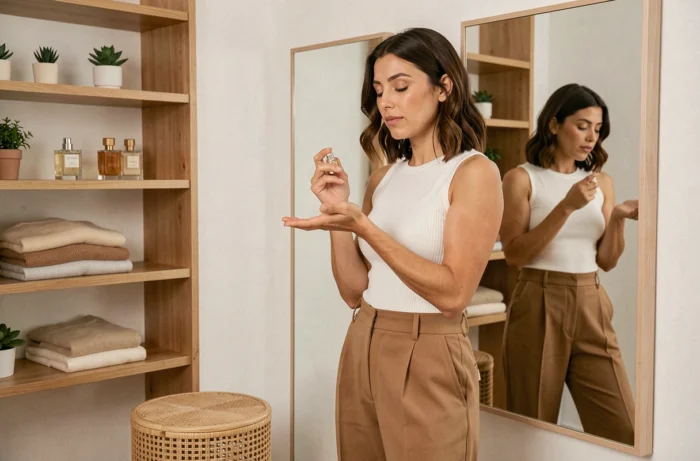
The women’s lifestyle taking shape amid these regulatory and commercial changes is based on curation rather than accumulation. Choosing a garment with its traceability in mind, selecting a skincare product by checking its reformulation timeline, weighing up a new item against a secondhand one by comparing materials: these habits are becoming style choices as much as consumer decisions.
- Check the composition before the brand, especially for frequently worn basics
- Plan for cosmetic reformulations by trying microplastic-free alternatives now
- Choose pieces whose origins can be traced, whether new or secondhand
Personal style is built on informed choices, not the volume of purchases. The women’s inspirations that elevate everyday life in 2026 come as much from understanding materials and formulations as from cuts and colors. By making information more accessible, European regulations give women practical tools to refine their choices, from their wardrobes to their beauty bags.