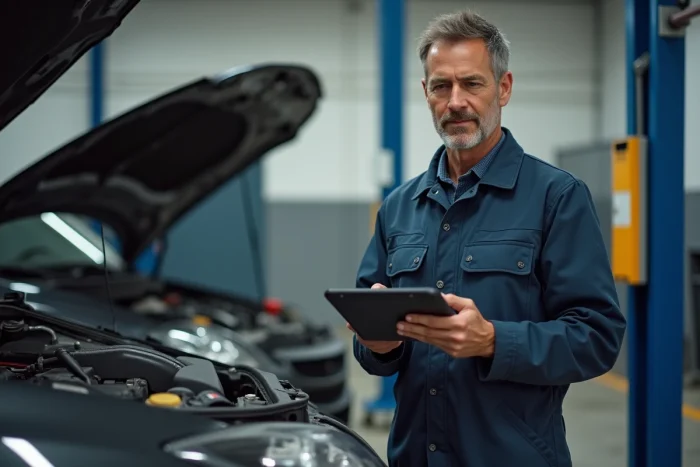
In 2026, it is impossible to erase any changes to brake pads without leaving a trace. Every operation performed by a professional must now be recorded in a precise register: technician’s details, list of parts, formal proof of qualification. No garage can manipulate its prices in the shadows anymore: the amount is displayed in the workshop, and the estimate must precede any work, without exception.
Inspections are now systematic, and penalties have increased: a workshop that violates the new rules risks its business, plain and simple. This kind of pressure does not only concern major repairs. Even routine maintenance is subject to this meticulous protocol, and the owner who evades it now assumes their own responsibility.
What the automotive garage regulations change in 2026: obligations and rights of motorists
Since the regulatory overhaul of 2026, going through a professional for the maintenance or repair of a car is no longer a matter of blind trust. To intervene, a workshop must be able to prove, with supporting documents, the registration of its professionals in the national business register, as well as the validity of their professional qualification certificate and capacity. This requirement blocks improvised operations: each service becomes traceable and documented, directly benefiting the customer.
On the customer side, the situation is evolving just as much. As soon as a vehicle crosses the threshold, the garage must provide a detailed estimate, explaining each step, the total price including tax, the timelines, and obtain the signature for the repair order. From routine checks to heavy mechanics, the rule remains. With this framework, the consumer code protects the motorist and provides a solid basis to contest any discrepancies on an invoice or partial service.
Here is what is now required of garages for each intervention:
- Visible and clear display of prices in the workshop (including tax)
- Systematic issuance of a repair certificate at the end of each intervention
- Adherence to the communicated deadlines, with official justification in case of delays
In this regard, auto-tech.be deciphers these developments, particularly the concrete impact on the quality of service and the respect of driver rights. In the face of the risk of immediate penalties, mastering this framework of rules is no longer negotiable for garages: a deviation can lead to the outright suspension of their activity.
How to recognize a qualified professional for the maintenance and repair of your vehicle?
There are signs that do not lie. A qualified professional prominently displays their qualification certificate at the reception, along with mention of their registration in the national business register. You can also demand that the garage reveal its certifications or the recognized training history of its mechanics: it is your right.
Transparency also means explaining the precise origin of the parts, describing the services offered without ambiguity, and providing written documentation at every visit. Every estimate must be clear, every detail accurate, without hidden traps. This level of demand reflects the internal health of a workshop and its degree of reliability.
Be sure to check for these signs of seriousness before handing over your keys:
- Professional qualification certificate displayed prominently
- Prices announced precisely with a detailed inventory of services
- Service certificate provided to each customer after intervention
The overall appearance of the workshop, the rigorous application of hygiene and safety rules, the precise organization of workspaces: these are what distinguish experienced teams. Consistency, attention to each vehicle, and formal adherence to procedures speak as much as diplomas.

Frequently asked questions and practical tips for confident car maintenance
What documents to demand during an intervention?
Before any work begins, request a detailed estimate. Read every word of the repair order: everything is included, from the nature of the operations to the parts to be replaced, as well as the total price including tax and the announced timeline for retrieving the vehicle. It serves as a safeguard in case of conflict. At the end of the work, the invoice provided must match every point validated on the estimate or the initial order.
How to ensure compliance with the consumer code?
Every mechanic is required to explicitly inform about prices, the origin of the parts used (whether new, refurbished, or reused), and to justify each intervention to the motorist. Nothing should escape this principle of clarity, which imposes factual explanations at every stage.
To avoid unpleasant surprises, here are some reflexes to adopt:
- Check for the mention “estimate accepted before work” on every signed document
- Ask for the exact origin of any replaced part
- Note the date of the periodic inspection and request a declaration of conformity for repairs affecting safety
Anticipate maintenance to avoid complications
Plan each periodic inspection in advance and archive every document related to repairs or maintenance. Record the inspection declarations in the vehicle’s maintenance log: you will gain immediate visibility and defuse potential disputes. In the workshop, method and vigilance build the best defense for the informed driver.
In the face of new requirements, vigilance, method, and common sense offer the only valid passport to navigate smoothly in this reinforced sector. The informed driver no longer suffers from changes; they anticipate them, with the maintenance log at hand and invoices in order, always ready to assert their rights without fearing hidden pitfalls.